Out now



Coming soon
Early builds





In development

10 games by Romain SimonStudio blogThe VR Phobia family
Ornithophobia (fear of birds): meaning, causes, how common it is and how to overcome it
On this page
- What does ornithophobia mean?
- How do you pronounce ornithophobia?
- Ornithophobia is a fear of which creatures?
- Fear of specific birds
- Fear of feathers (pteronophobia)
- What are the symptoms of ornithophobia?
- Why are birds scary to some people?
- What causes ornithophobia?
- How common is ornithophobia?
- How many people have ornithophobia?
- Do I have ornithophobia? A quick self-check
- How to overcome ornithophobia
- Can virtual reality help with a fear of birds?
- FAQ
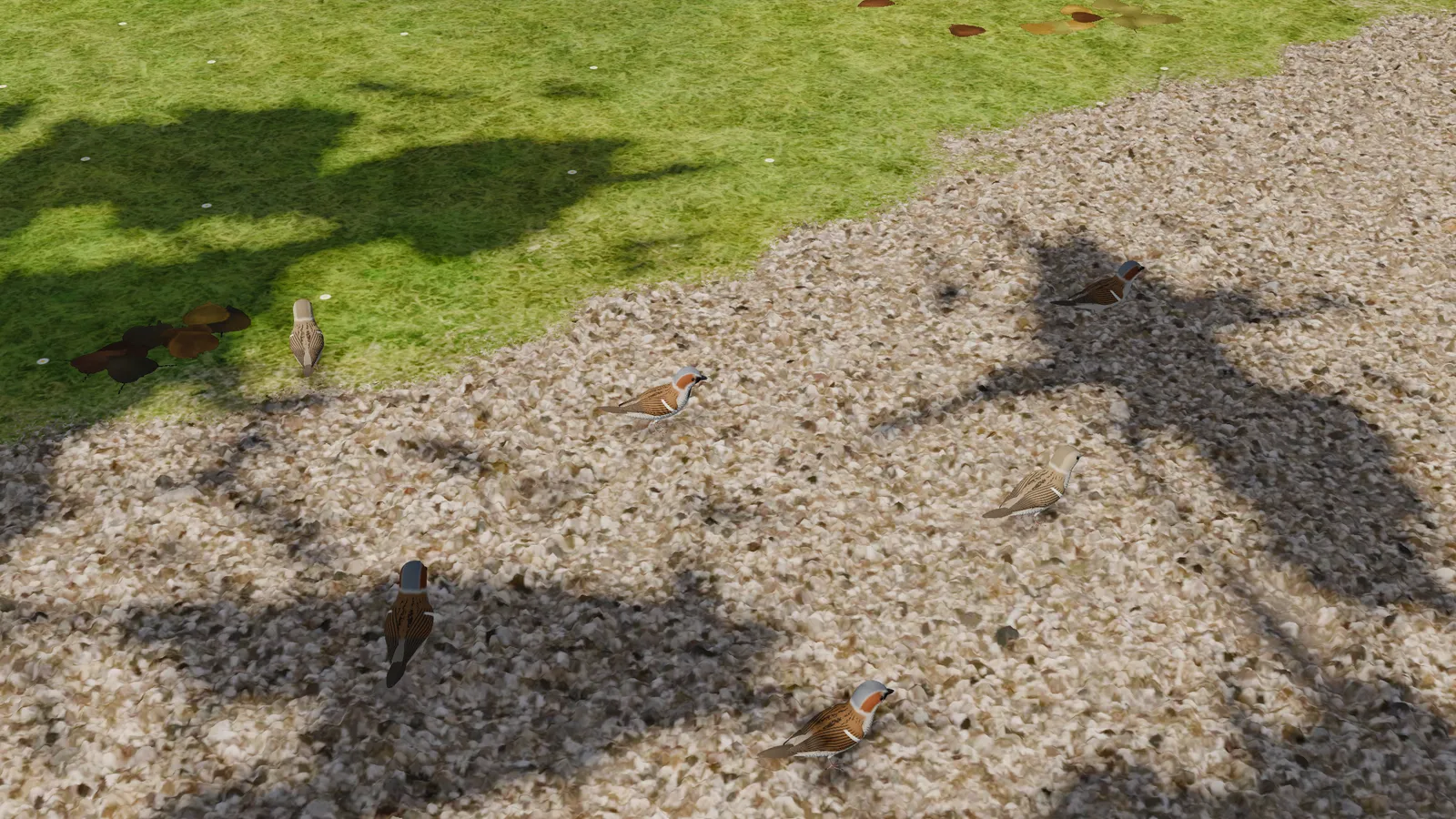
Ornithophobia is the fear of birds: an intense, lasting fear of birds, out of proportion to any real danger, that leads people to avoid them. It is a specific phobia of the animal type, like the fear of spiders or dogs. So if you are wondering what the fear of birds is called, the answer is ornithophobia; people also simply say bird phobia, phobia of birds, or being scared of birds.
This article is general information, not medical advice. If a fear of birds affects your daily life, talk to a doctor or a therapist trained in cognitive behavioural therapy (CBT).
What does ornithophobia mean?
Ornithophobia means “fear of birds”. The word joins two Greek roots: ornis (stem ornith-), “bird”, and phobos, “fear”, which originally meant “flight”, as in running away, before it became the common word for fear, according to the Online Etymology Dictionary and its entry for -phobia. The same ornitho- root gives ornithology, the study of birds.
How do you pronounce ornithophobia?
Say it or-nih-thuh-FOH-bee-uh, with the stress on “FOH”. Wiktionary gives the American pronunciation as /ˌɔɹnɪθəˈfoʊbiə/ and the British one as /ˌɔːnɪθəˈfəʊbɪə/.
Ornithophobia is a fear of which creatures?
Ornithophobia is a fear of birds. For some people that means every bird; for others it is mostly one kind, such as pigeons, gulls or large birds, or mostly one feature: flapping wings, sudden take-offs, beaks, claws or feathers. Many people say the movement frightens them more than a bird sitting still.
Fear of specific birds
The fears below are common descriptions, not separate diagnoses. Whatever the bird, it is still ornithophobia, and it responds to the same approach.
Fear of pigeons
Pigeons are the birds most people meet every day, on pavements, squares and café terraces. They often walk close, gather in flocks around food and can take off all at once, which is why the fear of pigeons is one of the most commonly described.

Fear of seagulls
Gulls are large, loud and bold around food. People often describe fearing their swoops, their calls and the way they circle overhead at the beach or by the harbour.
Fear of crows
Crows and ravens are big, dark and intelligent birds, sometimes seen as ominous in stories. People who fear them often mention their size, their calls and the feeling of being watched.
Fear of parrots
Parrots are close to people at home, in pet shops and aviaries. Their strong beaks, loud screeches and sudden flapping are what people with this fear usually mention.

Fear of chickens and hens
Hens are small but fast and unpredictable: they run, flap and peck at the ground around your feet, which is what tends to unsettle people on farms or in gardens.
Fear of eagles and birds of prey
Eagles, hawks and owls are large birds with talons and hooked beaks. Fear of them usually centres on their size and sharp features rather than everyday encounters, which are rare.
Fear of feathers (pteronophobia)
Pteronophobia is the fear of feathers, from the Greek pteron, “feather”, according to Wiktionary. It can exist on its own, for example a strong aversion to touching feathers or feather pillows, or as part of ornithophobia when feathers are one of the things a person fears about birds. Like other specific fears, it responds to gradual exposure.
What are the symptoms of ornithophobia?
Symptoms appear near birds, or just from thinking about them. The NHS lists the typical symptoms of a phobia:
- feeling dizzy or light-headed, a pounding or unusual heartbeat, tightness in the chest;
- feeling sick, trembling or shaking;
- severe anxiety, and an intense fear of fainting, losing control or dying.
Then comes avoidance: changing routes, refusing café terraces, staying away from parks, beaches or town squares. The fear can feel overwhelming even when you know the bird is harmless.
Why are birds scary to some people?
Birds move in ways that are hard to predict: they take off suddenly, fly close to your face, gather in flocks and flap loudly. For someone already anxious around them, that unpredictability is often the scariest part. What keeps the fear going over time is mostly avoidance, as the diagram below shows.
- 1Triggera pigeon lands nearby
- 2Fear risesheart races, urge to leave
- 3Avoidanceyou cross the street
- 4Short reliefthe fear drops, for now
- 5Fear staysnext time is just as bad
- and the loop starts again
What causes ornithophobia?
There is no single known cause. The MSD Manual states that the causes of phobias are unknown. The NHS notes that many phobias can be linked to a frightening event or a stressful situation, such as a frightening childhood experience with an animal, and that a phobia can also be learned from family or friends who have one. Phobias usually develop in childhood, the teenage years or early adulthood.
Whatever started it, avoidance keeps it alive: each escape brings relief, and the relief teaches you that escaping was necessary. Exposure research by Craske et al. (Behaviour Research and Therapy, 2014) shows that new, safer learning happens when you stay and discover that what you expected does not happen.
How common is ornithophobia?
There is no reliable figure for ornithophobia alone. Large surveys measure specific phobias as a group, not the fear of birds on its own, so any precise percentage for bird phobia you may read online is not backed by data.
What we do know about specific phobias as a whole:
- across 25 surveys in 22 countries, about 7.4% of adults have had a specific phobia at some point in their life, and it usually starts in childhood, with a median onset at age 8 (Wardenaar et al., Psychological Medicine, 2017);
- in the United States, an estimated 12.5% of adults experience a specific phobia in their lifetime (NIMH);
- fears and phobias of heights and of animals are the most common kinds (Eaton et al., The Lancet Psychiatry, 2018).
How many people have ornithophobia?
Nobody knows precisely. Bird phobia belongs to the animal type of specific phobia, one of the most common types, but no large study has counted people with ornithophobia specifically.
Do I have ornithophobia? A quick self-check
This is not a test and it cannot diagnose anything. It follows the summary of the DSM-5-TR criteria for specific phobia in the MSD Manual, and only helps you decide whether to talk to a professional.
How to overcome ornithophobia
The best-supported way to overcome a fear of birds is gradual exposure, the core of cognitive behavioural therapy: you approach birds in small steps, stay long enough to learn that the feared outcome doesn’t happen, and repeat in different places until real-life encounters feel manageable. According to the MSD Manual, exposure therapy helps around 85% of people with a specific phobia, and even a single session can make a real difference.
Our step-by-step guide explains how to build a fear ladder, how long to stay, how often to practise and when to get help: How to overcome ornithophobia.
Can virtual reality help with a fear of birds?
Virtual reality can make the first steps easier to reach and to repeat: the bird is there whenever you are ready, and you control its distance, number and movement. For specific phobias in general, a meta-analysis of 30 randomised trials found VR exposure as effective as real-life exposure (Carl et al., Journal of Anxiety Disorders, 2019). The honest caveat: these studies are mostly about heights, spiders and flying, not birds. More in Why virtual reality works for phobias.
FAQ
What is ornithophobia?
Ornithophobia is the fear of birds: an intense, lasting fear of birds, out of proportion to the actual danger, that leads to avoidance. It is a specific phobia of the animal type.
What does ornithophobia mean?
It means “fear of birds”, from the Greek ornis (ornith-), “bird”, and phobos, “fear”.
How do you pronounce ornithophobia?
Or-nih-thuh-FOH-bee-uh, stressed on “FOH”. In phonetic notation: /ˌɔɹnɪθəˈfoʊbiə/ (American) or /ˌɔːnɪθəˈfəʊbɪə/ (British).
What is the fear of birds called?
The fear of birds is called ornithophobia. The fear of feathers specifically is called pteronophobia.
Ornithophobia is a fear of which creatures?
Birds. Some people fear all birds, others mainly pigeons, gulls, crows, parrots, hens or birds of prey, or mainly flapping wings and feathers.
What causes ornithophobia?
There is no single known cause. Many phobias can be linked to a frightening experience or learned from people close to you, and avoidance keeps the fear going.
How common is ornithophobia?
There is no reliable figure for the fear of birds alone. Specific phobias as a whole affect about 7.4% of adults at some point in their life across 22 countries, and animal phobias are among the most common types.
How many people have ornithophobia?
Nobody has counted it on its own. It belongs to the animal type of specific phobia, one of the most common types.
How to overcome ornithophobia?
With gradual, repeated exposure to birds, ideally guided by a therapist trained in CBT: build a ladder of situations from easy to hard, stay with each step, practise often and take it into real life. See our step-by-step guide.
Sources
- Wiktionary. “ornithophobia” and “pteronophobia” (etymology and pronunciation). en.wiktionary.org/wiki/ornithophobia, en.wiktionary.org/wiki/pteronophobia
- Online Etymology Dictionary. “ornitho-” and “-phobia”. etymonline.com/word/ornitho-, etymonline.com/word/-phobia
- NHS. Phobias: overview. nhs.uk
- Barnhill JW. Specific phobias. MSD Manual Professional Version, reviewed April 2026. msdmanuals.com
- National Institute of Mental Health. Specific phobia (statistics, National Comorbidity Survey Replication). nimh.nih.gov
- Wardenaar KJ, Lim CCW, Al-Hamzawi AO, et al. The cross-national epidemiology of specific phobia in the World Mental Health Surveys. Psychological Medicine. 2017;47(10):1744–1760. doi:10.1017/S0033291717000174
- Eaton WW, Bienvenu OJ, Miloyan B. Specific phobias. The Lancet Psychiatry. 2018;5(8):678–686. doi:10.1016/S2215-0366(18)30169-X
- Craske MG, Treanor M, Conway CC, Zbozinek T, Vervliet B. Maximizing exposure therapy: an inhibitory learning approach. Behaviour Research and Therapy. 2014;58:10–23. doi:10.1016/j.brat.2014.04.006
- Carl E, Stein AT, Levihn-Coon A, et al. Virtual reality exposure therapy for anxiety and related disorders: a meta-analysis of randomized controlled trials. Journal of Anxiety Disorders. 2019;61:27–36. doi:10.1016/j.janxdis.2018.08.003
Keep reading
 Acrophobia (fear of heights): meaning, vertigo, causes, how common it is and how to overcome itAcrophobia is the fear of heights, the most common specific phobia in some surveys. What the word means, how it differs from vertigo, symptoms, causes, how common it is, a quick self-check, and how to overcome it.
 Arachnophobia (fear of spiders): meaning, causes, how common it is and how to overcome itArachnophobia is the fear of spiders, one of the most common specific phobias. What the word means, how to pronounce it, symptoms, causes, how common it is, a quick self-check, and how to overcome it.
 Claustrophobia (fear of enclosed spaces): meaning, symptoms, causes and how to overcome itClaustrophobia is the fear of enclosed spaces such as lifts, tunnels, crowded trains and MRI scanners. What the word means, how to pronounce it, symptoms, causes, how common it is, a quick self-check, and how to overcome it.