Out now



Coming soon
Early builds





In development

10 games by Romain SimonStudio blogThe VR Phobia family
How to overcome ornithophobia (fear of birds): a step-by-step guide
On this page
- Can ornithophobia be treated?
- Step 1: Understand the avoidance cycle
- Step 2: Write your fear ladder
- Step 3: Start low, and stay
- Step 4: Repeat often
- Step 5: Vary the birds, places and times
- Step 6: Use virtual reality as a bridge
- Step 7: Take it into real life
- Step 8: Keep practising afterwards
- When should you see a professional?
- What to avoid
- FAQ
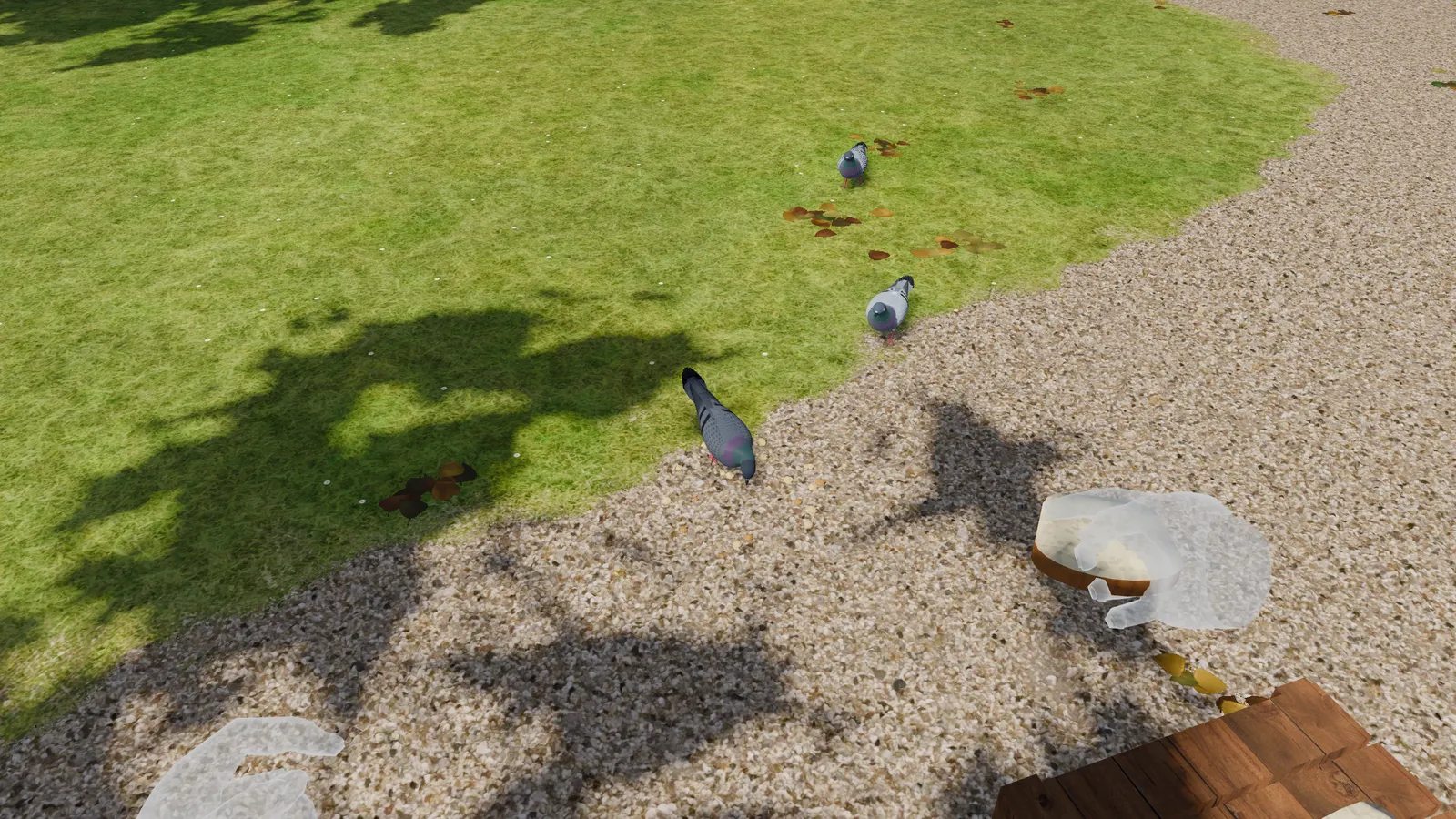
The best-supported way to overcome ornithophobia is gradual exposure: facing birds in small, planned steps, staying long enough to learn that what you fear doesn’t happen, and repeating until real birds feel manageable. It is the core of cognitive behavioural therapy (CBT) for specific phobias, and it works for most people. This guide walks you through it step by step.
This guide is general information, not medical advice. If your fear is severe, if you have panic attacks, or if you also feel low or anxious most of the time, do this with a therapist trained in CBT. VR Phobia is mentioned as one possible tool; it is not a medical treatment.
New to the topic? Start with what ornithophobia is, what causes it and how common it is.
Can ornithophobia be treated?
Yes. Specific phobias, including the fear of birds, respond well to exposure-based treatment. According to the MSD Manual, exposure therapy helps around 85% of people with a specific phobia, and even a single session can bring a significant benefit.
The main options for bird phobia treatment are:
- CBT with gradual exposure, over several sessions with a therapist, plus practice between sessions;
- one-session treatment, a single long session of real-life exposure and modelling guided by a therapist, first described by Öst (Behaviour Research and Therapy, 1989): in his first 20 patients, the session lasted about two hours on average, and 90% were much improved or recovered at follow-up; a 2022 meta-analysis found single-session and multi-session exposure equally effective for specific phobias, with the single session more time-efficient (Odgers et al., Behaviour Research and Therapy);
- exposure in virtual reality, which a meta-analysis of 30 randomised trials found as effective as real-life exposure for anxiety disorders, specific phobias included (Carl et al., Journal of Anxiety Disorders, 2019).
The NHS lists talking therapies such as CBT as the main treatment for phobias. The steps below follow the same principles and can be used on your own for a mild fear, or alongside a therapist.
Step 1: Understand the avoidance cycle
Avoiding birds is what keeps the fear alive. Every time you cross the street or leave a terrace because of a pigeon, you feel relief, and that relief teaches your brain that escaping kept you safe. The fear stays exactly as strong for next time.
- 1Triggera pigeon lands nearby
- 2Fear risesheart races, urge to leave
- 3Avoidanceyou cross the street
- 4Short reliefthe fear drops, for now
- 5Fear staysnext time is just as bad
- and the loop starts again
Exposure breaks the loop at the avoidance step: instead of leaving, you stay, and you discover that what you feared doesn’t happen.
Step 2: Write your fear ladder
A fear ladder is a list of bird situations ordered from the easiest to the hardest, each rated by how much fear it causes, from 0 (calm) to 10 (the worst fear you can imagine). Changing one thing at a time between steps keeps each one achievable: distance, number of birds, movement, sound, flight, then contact.
An example fear ladder for birds
Fear before starting, from 0 (calm) to 10 (worst fear)
- 1Look at photos of birds2/10
- 2Watch videos of birds, with sound3/10
- 3Watch one bird from a window4/10
- 4Stand in a park with a few pigeons 10 m away5/10
- 5Let pigeons walk within 3 m6/10
- 6Stay while birds take off nearby7/10
- 7Sit on a bench with pigeons at your feet8/10
- 8Scatter seeds and let birds come close9/10
Write your own. Aim for 8 to 12 steps, with no gap bigger than two or three points between neighbours. Here is a template you can copy or print:
| Step | Situation | Fear before (0–10) | Fear after (0–10) | What I expected | What actually happened |
|---|---|---|---|---|---|
| 1 | |||||
| 2 | |||||
| 3 | |||||
| 4 | |||||
| 5 | |||||
| 6 | |||||
| 7 | |||||
| 8 |
Step 3: Start low, and stay
Begin with a step that feels uncomfortable but manageable, around 3 to 5 out of 10. Stay in the situation until your fear clearly drops, or until you have tested your prediction: if you expected the bird to fly at your face, stay until you have seen that it didn’t.
Modern exposure research describes this as inhibitory learning: the old fear isn’t erased, a new and safer memory is built on top of it. Craske et al. (Behaviour Research and Therapy, 2014) recommend focusing on expectancy violation, noticing that the feared outcome didn’t happen, rather than waiting for the fear to reach zero. Before each step, write down what you expect; after it, write down what really happened.
Step 4: Repeat often
Repetition matters more than heroics. In a trial of a smartphone VR app for fear of heights, a single one-hour session did not change how people behaved on a real lookout tower, but six additional 30-minute sessions at home did (Bentz et al., npj Digital Medicine, 2021). In the Oxford trial of automated VR therapy, about six 30-minute sessions over two weeks produced a large drop in fear of heights (Freeman et al., The Lancet Psychiatry, 2018).
A practical rhythm: short sessions of 15 to 30 minutes, several times a week, for two to three weeks. Repeat a step until it feels easy, then move up one rung. Practising between therapy sessions also helps people stay in treatment (Benbow and Anderson, Journal of Anxiety Disorders, 2019).
Step 5: Vary the birds, places and times
Once a step feels easier, change the context: another park, a square, a beach; pigeons, then sparrows, then gulls; morning and evening. Craske et al. list variability and multiple contexts among the strategies that make exposure learning stronger and less likely to fade.
Step 6: Use virtual reality as a bridge
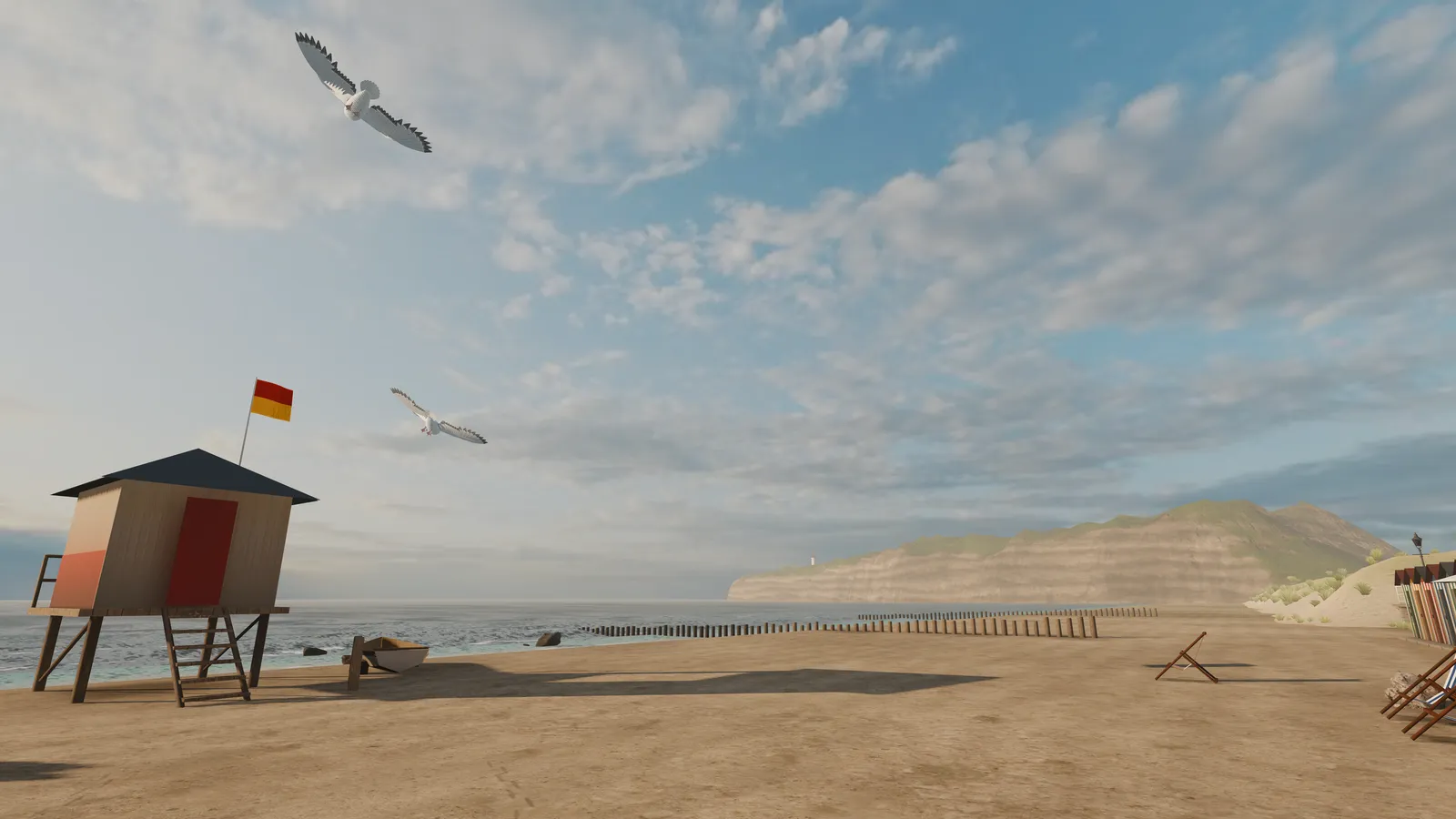
Between pictures and real birds there is a big jump. Virtual reality can fill it: the bird is there whenever you are ready, you control its distance, number and movement, and you can stop at any moment.
The research supports VR exposure for specific phobias in general:
- a meta-analysis of 14 trials found that gains made in VR carried over to real-life behaviour, with no significant difference from real-life exposure (Morina et al., Behaviour Research and Therapy, 2015);
- a fully self-guided smartphone VR app with cardboard goggles reduced fear of heights at home over three weeks (Donker et al., JAMA Psychiatry, 2019);
- an automated VR program with a virtual coach, with no therapist in the room, produced large improvements (Freeman et al., 2018).
The honest caveat: these studies are mostly about heights, spiders and flying, not birds. Using VR for birds is a reasonable application of the evidence, not a proven result. More in Why virtual reality works for phobias.
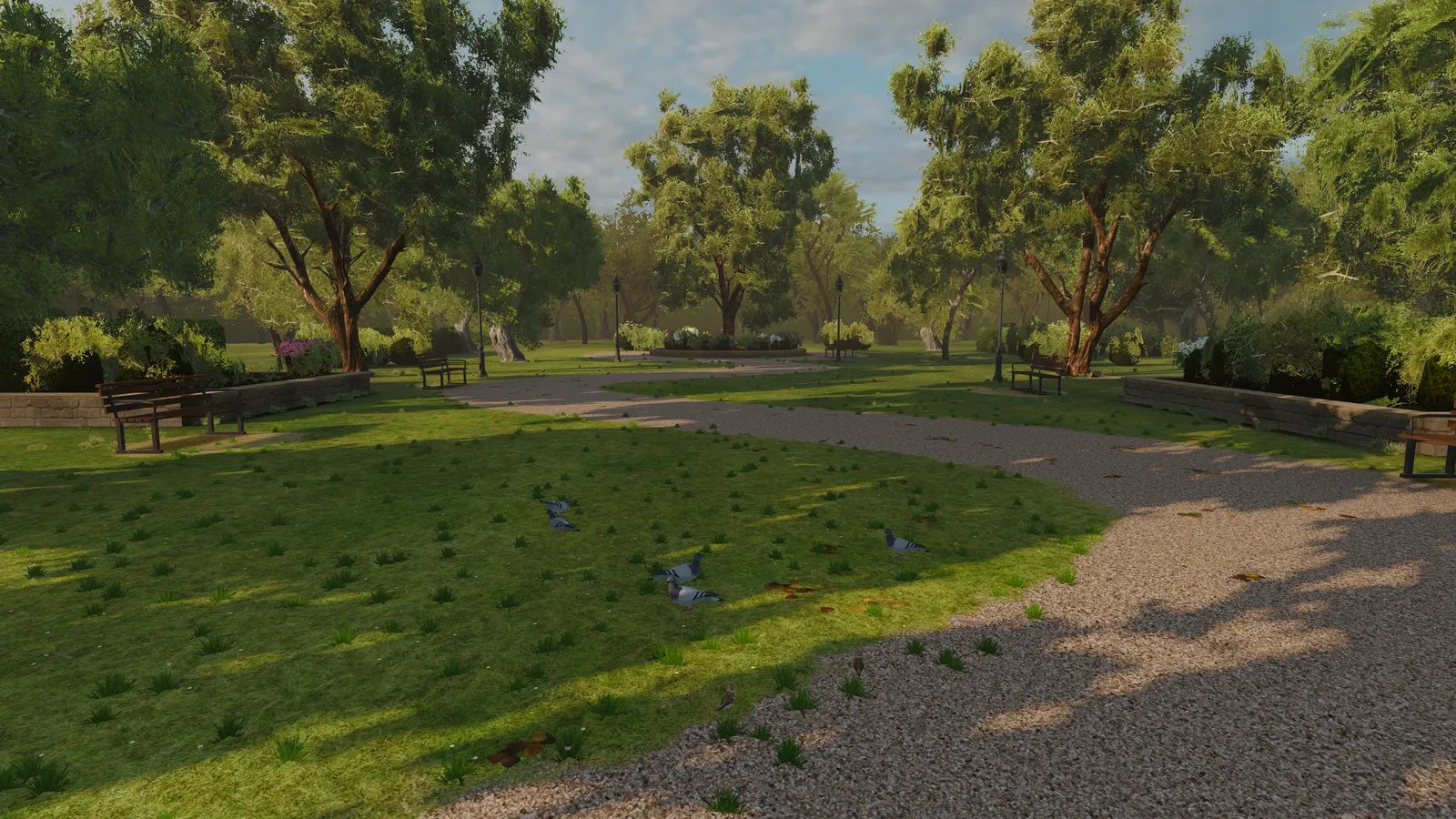
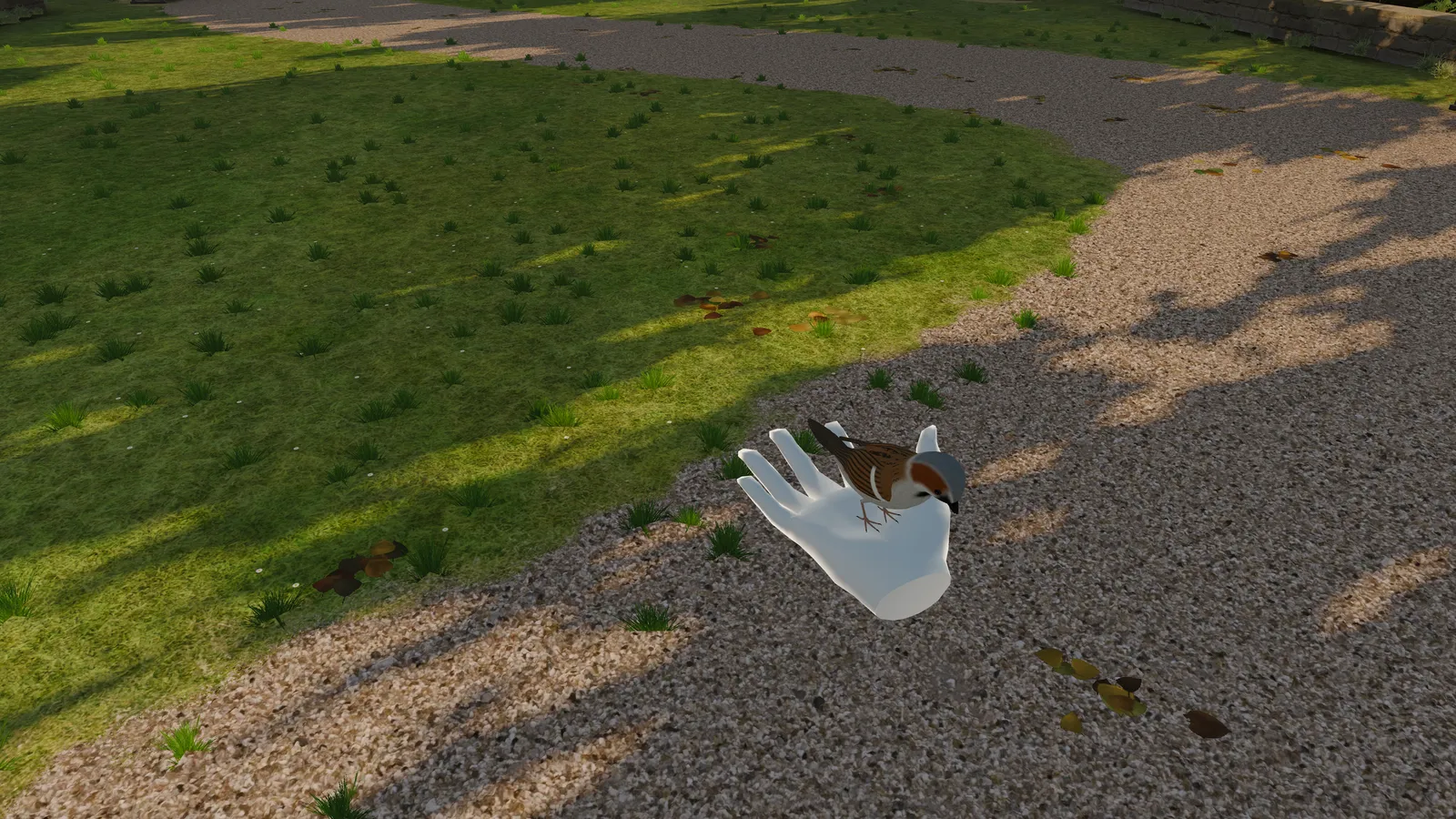
VR Phobia: Birds is built as exactly this kind of ladder: 11 chapters and 51 short levels, from a quiet park with birds far away to a sparrow resting on your hand.
Step 7: Take it into real life
VR and pictures prepare you; real birds confirm what you learned. Once a virtual or photo step feels manageable, do its real-life version: watch pigeons from a bench, walk through a square, eat outside on a terrace. Keep using the ladder: same rules, one change at a time, stay until you’ve tested your prediction.
Step 8: Keep practising afterwards
Fear can come back after successful exposure; Craske et al. (2014) note that a substantial number of people experience a return of fear after treatment. If it happens, it doesn’t mean you failed. Plan occasional refresher sessions, for example one a week after you finish and another a month later, and go back down the ladder a few rungs if the fear returns.
When should you see a professional?
See your doctor or a therapist trained in CBT if the fear seriously affects your life, if you have panic attacks, if self-help isn’t moving you up the ladder, or if you also feel low or anxious most of the time. The NHS advises seeing a GP when a phobia is affecting your life. A therapist can guide exposure safely, adapt the pace, and offer intensive one-session treatment where available (Öst, 1989).
What to avoid
- Safety behaviours: holding your breath, looking away, keeping a hand over your face, staying glued to an exit. They feel protective but stop you from learning that you are safe; drop them gradually (Craske et al., 2014).
- Leaving at the peak of fear: if you escape when the fear is highest, you repeat the avoidance cycle. If a step is too hard, go back one rung rather than leaving in panic, and plan to stay longer next time.
- Jumping to the top alone: throwing yourself into the hardest situation without preparation or support can be overwhelming. Intensive exposure exists, but it is delivered by a therapist.
- Waiting to feel ready: you rarely feel ready. Start with a step that is uncomfortable but manageable.
FAQ
How long does it take to overcome a fear of birds?
It varies. In trials of self-guided VR for other phobias, two to three hours of total exposure over two to three weeks produced large improvements, and a therapist-led one-session treatment can work in a single long session.
Can I overcome ornithophobia on my own?
Many people make progress on their own with a fear ladder and regular practice, especially when the fear is mild to moderate. If the fear is severe or you have panic attacks, work with a therapist trained in CBT.
What is the best treatment for bird phobia?
Exposure-based cognitive behavioural therapy: gradual, repeated contact with birds, in real life or virtual reality, ideally guided by a therapist. A single intensive session can be as effective as several shorter ones.
Does exposure therapy work for the fear of birds?
Exposure therapy works for specific phobias in general, and the fear of birds is a specific phobia of the animal type. Research specific to birds is very limited, so results from other animal phobias are applied by analogy.
What if I panic during exposure?
Pause, breathe slowly and stay if you can until the peak passes; then go back one step on the ladder next time. If it happens often, or if the panic feels overwhelming, get a therapist’s help.
Does VR work for ornithophobia?
VR exposure works about as well as real-life exposure for specific phobias in general, but there is no large trial on birds. VR Phobia: Birds is a graded-exposure tool, not a medical treatment.
Sources
- Barnhill JW. Specific phobias. MSD Manual Professional Version, reviewed April 2026. msdmanuals.com
- NHS. Phobias: overview and treatment. nhs.uk/overview, nhs.uk/treatment
- Öst LG. One-session treatment for specific phobias. Behaviour Research and Therapy. 1989;27(1):1–7. doi:10.1016/0005-7967(89)90113-7
- Odgers K, Kershaw KA, Li SH, Graham BM. The relative efficacy and efficiency of single- and multi-session exposure therapies for specific phobia: a meta-analysis. Behaviour Research and Therapy. 2022;159:104203. doi:10.1016/j.brat.2022.104203
- Craske MG, Treanor M, Conway CC, Zbozinek T, Vervliet B. Maximizing exposure therapy: an inhibitory learning approach. Behaviour Research and Therapy. 2014;58:10–23. doi:10.1016/j.brat.2014.04.006
- Carl E, Stein AT, Levihn-Coon A, et al. Virtual reality exposure therapy for anxiety and related disorders: a meta-analysis of randomized controlled trials. Journal of Anxiety Disorders. 2019;61:27–36. doi:10.1016/j.janxdis.2018.08.003
- Morina N, Ijntema H, Meyerbröker K, Emmelkamp PMG. Can virtual reality exposure therapy gains be generalized to real-life? A meta-analysis of studies applying behavioral assessments. Behaviour Research and Therapy. 2015;74:18–24. doi:10.1016/j.brat.2015.08.010
- Freeman D, Haselton P, Freeman J, et al. Automated psychological therapy using immersive virtual reality for treatment of fear of heights: a single-blind, parallel-group, randomised controlled trial. The Lancet Psychiatry. 2018;5(8):625–632. doi:10.1016/S2215-0366(18)30226-8
- Donker T, Cornelisz I, van Klaveren C, et al. Effectiveness of self-guided app-based virtual reality cognitive behavior therapy for acrophobia: a randomized clinical trial. JAMA Psychiatry. 2019;76(7):682–690. doi:10.1001/jamapsychiatry.2019.0219
- Bentz D, Wang N, Ibach MK, et al. Effectiveness of a stand-alone, smartphone-based virtual reality exposure app to reduce fear of heights in real-life: a randomized trial. npj Digital Medicine. 2021;4:16. doi:10.1038/s41746-021-00387-7
- Benbow AA, Anderson PL. A meta-analytic examination of attrition in virtual reality exposure therapy for anxiety disorders. Journal of Anxiety Disorders. 2019;61:18–26. doi:10.1016/j.janxdis.2018.06.006
Keep reading
 Acrophobia (fear of heights): meaning, vertigo, causes, how common it is and how to overcome itAcrophobia is the fear of heights, the most common specific phobia in some surveys. What the word means, how it differs from vertigo, symptoms, causes, how common it is, a quick self-check, and how to overcome it.
 Arachnophobia (fear of spiders): meaning, causes, how common it is and how to overcome itArachnophobia is the fear of spiders, one of the most common specific phobias. What the word means, how to pronounce it, symptoms, causes, how common it is, a quick self-check, and how to overcome it.
 Claustrophobia (fear of enclosed spaces): meaning, symptoms, causes and how to overcome itClaustrophobia is the fear of enclosed spaces such as lifts, tunnels, crowded trains and MRI scanners. What the word means, how to pronounce it, symptoms, causes, how common it is, a quick self-check, and how to overcome it.